
White-tailed Ptarmigan (Lagopus leucura)
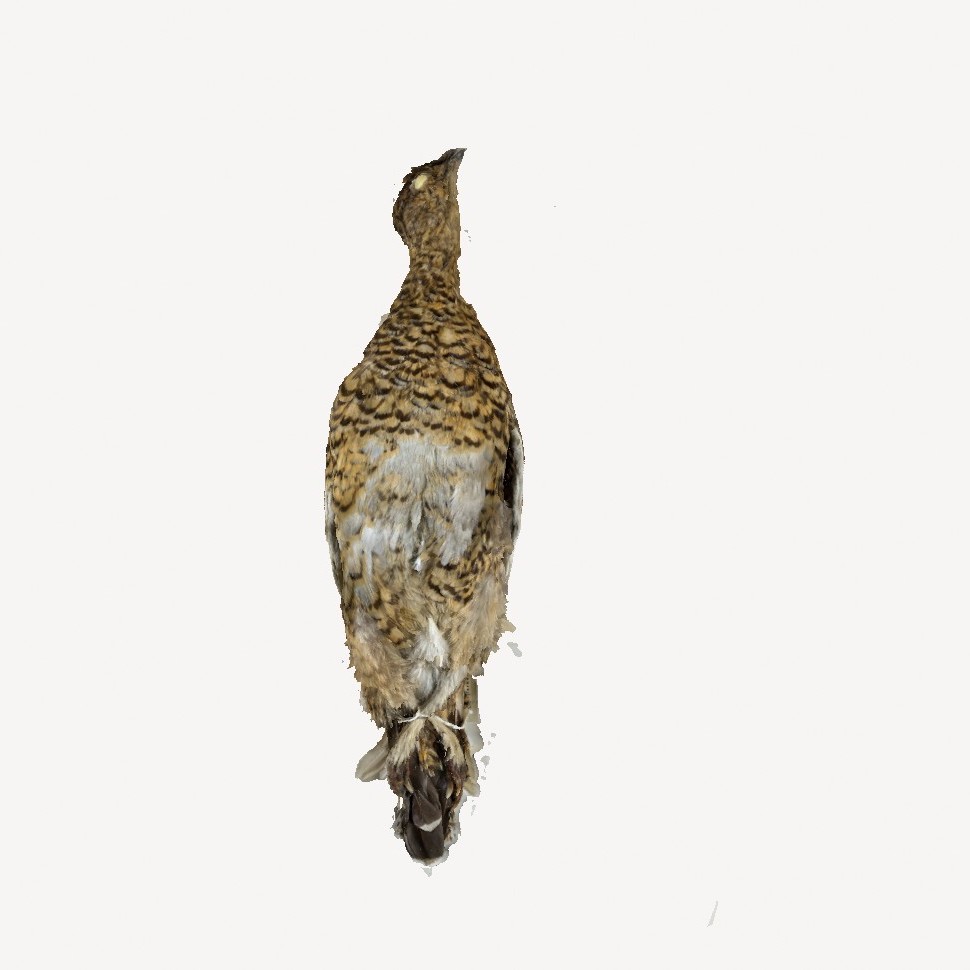
*The scan was provided by the artist Mandy Bass.
Specimen collection provided by the North Carolina Museum of Natural Sciences.
Status: Listed as threatened, 2024
Range: The White-tailed Ptarmigan’s primary range extends from southeastern Alaska, the Yukon, and the Northwest Territories south through British Columbia and western Alberta to northwestern Montana and the northern Cascade Mountains in Washington. Smaller, fragmented populations persist in suitable alpine environments throughout the Rocky Mountains of Montana, Colorado, and northern New Mexico. The bird has disappeared from parts of Wyoming and New Mexico. Additionally, it has been introduced into high-alpine areas outside its historical range, including the Sierra Nevada in California, the Uinta Mountains in Utah, Pikes Peak in Colorado, and the Pecos Wilderness in New Mexico.
Habitat: This species is specialized for cold, alpine environments above the treeline. It relies on rocky tundra, snow-covered slopes, and krummholz (dwarf tree) zones for breeding, feeding, and camouflage. As seasonal snowpack declines and treelines shift upward due to warming, these habitats are shrinking.
Human Impact: Global warming is the primary threat to the White-tailed Ptarmigan, as it depends on cold alpine conditions that are rapidly disappearing. Additional pressures include recreational activities such as skiing, off-road vehicle use, and hiking, which disturb fragile habitats. Mining operations, livestock grazing, hunting, and increased exposure to disease and predators further contribute to the species’ decline.
Significant Events: The White-tailed Ptarmigan became the first bird listed under the Endangered Species Act specifically due to climate change in 2024. Its listing highlights the vulnerability of alpine species to rising temperatures and serves as a stark indicator of the long-term impacts of human-driven climate shifts on specialized wildlife.