
Tennessee Warbler (Leiothlypis peregrina)
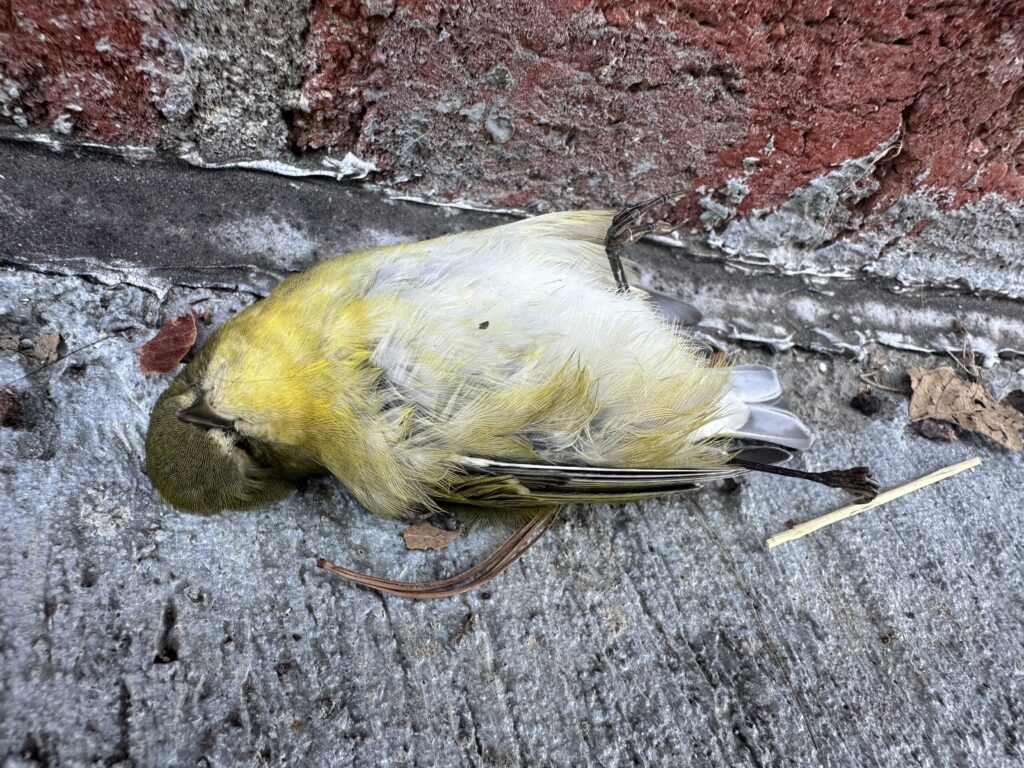
*Image provided by artist Mandy Bass.
Status: Declining. Tennessee Warbler’s numbers have dropped up to 50% since the 1980s.
Range: Breeds in the boreal forests of Canada and parts of the northern United States. During migration, it can be found across much of the eastern U.S., and it winters in open woods and edges in Central America.
Habitat: Nests in boreal forests and thickets during the breeding season; winters in open woodlands, forest edges, and secondary growth in Central America.
Human Impact: Though still relatively common, the Tennessee Warbler faces significant threats, including habitat loss and fragmentation in both its breeding and wintering grounds. Urbanization, logging, and agricultural expansion have contributed to this loss. The bird is also frequently injured or killed by collisions with glass windows, communications towers, and wind turbines.
Significant Events: The Tennessee Warbler is one of many migratory birds that are impacted by collisions with wind turbines. A study by the U.S. Fish and Wildlife Service estimated that up to 500,000 birds are killed annually due to collisions with wind turbines.