
Ruby-throated Hummingbird (Archilochus colubris)
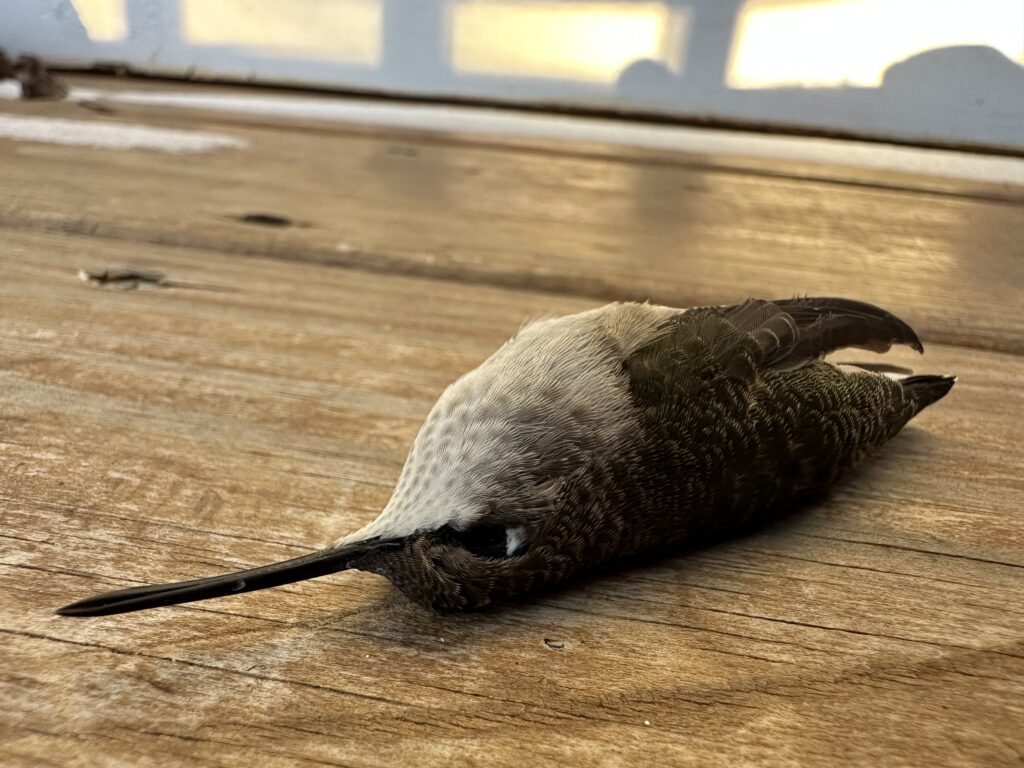
*Image provided by artist Mandy Bass
Status: Not Listed as Threatened (IUCN)
Range: Ruby-throated hummingbirds spend summers throughout the eastern United States. In autumn, they migrate to Central America, with some individuals wintering in southern Florida. They prefer habitats abundant with flowers, including fields, parks, backyards, and open forest clearings.
Habitat: These hummingbirds can thrive in a variety of habitats, but they favor deciduous woodlands, old fields, forest edges, meadows, orchards, and residential backyards where flowering plants are present.
Human Impact: While not currently listed as threatened, Ruby-throated Hummingbirds face challenges due to habitat destruction and the loss of native flowering plants. Urbanization and agricultural expansion have contributed to the decline of their natural foraging habitats, though they often adapt to human-altered environments like gardens with feeders. Additionally, climate change may alter their migratory patterns and availability of food sources.
Significant Events: Over the last few decades, the popularity of backyard bird feeders with sugar-water solutions has provided a supplementary food source, helping many hummingbirds survive through migration and harsh winters. However, this has also led to concerns about feeder dependency, where some birds might rely too heavily on artificial food sources instead of natural habitats.