
Starling (Sturnus vulgaris)
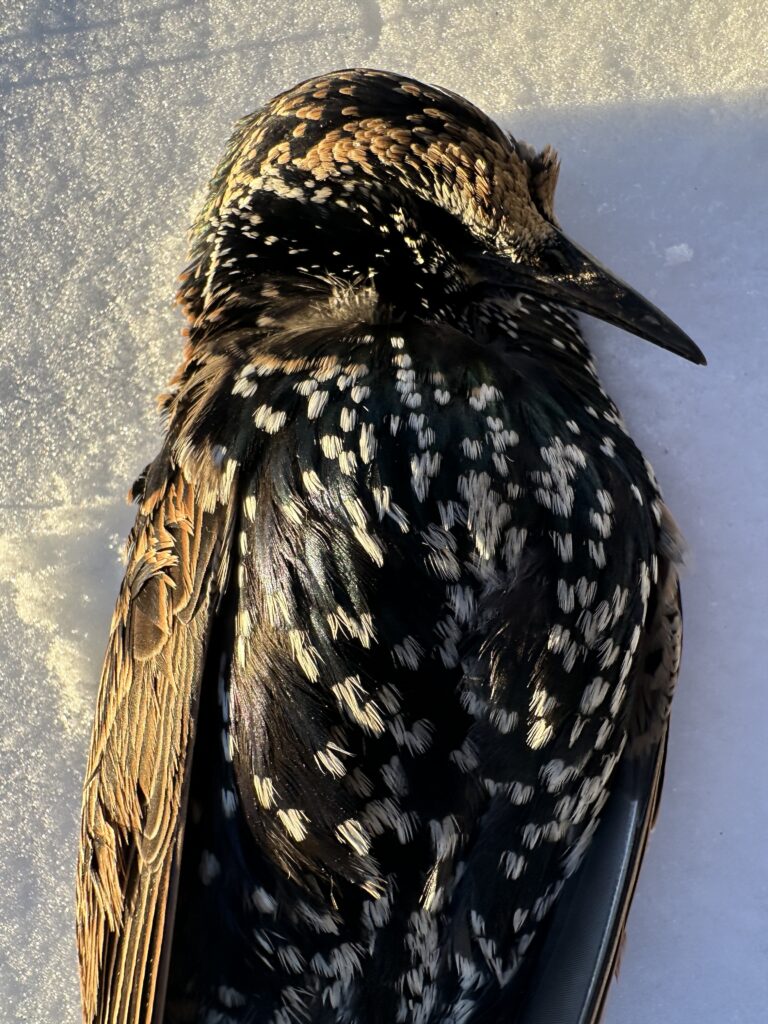
Status: Declining. Since the 1980s, Native populations in Europe have declined by over 50%, leading to their classification as threatened in several countries.
Range: Native to Europe and western Asia; introduced populations now span across North America, South Africa, Australia, and New Zealand.
Habitat: Grasslands, agricultural areas, cities, and suburban environments. Highly adaptable to human-altered landscapes.
Human Impact: Introduced to North America in the 1890s as part of a misguided effort to populate the continent with every bird mentioned in Shakespeare. Now considered invasive in many regions, starlings have displaced native cavity-nesting birds and caused significant agricultural damage. In their native range, however, populations have declined sharply due to habitat loss and changes in land use—especially intensive farming practices.
Significant Events: 1890: ~100 starlings were released in New York’s Central Park. Considered both a cautionary tale of species introduction and a warning about unsustainable agricultural practices.